Friday, 27 April 2018

Fandom

Still working in choice diversity. One way we can be different is in the way we spend our recreational time. Some people join fandoms for whatever it is they are interested in. This is an overview of fandom not in depth (because not enough time, it is a broad topic).

Defining fandom. There are two dictionary definitions required for fandom.
Fan: an enthusiastic devotee, follower, or admirer of a sport, pastime, celebrity, etc. ("fan," n.d.)
 Fandom: fans collectively, as of a motion-picture star or a professional game or sport. ("fandom," n.d.)

That is a very narrow definition of fandom. Fandoms extend to books, tv series, films, comics, video games, musical acts. Anything people congregate around has the potential to form a fandom. Some are more socially accepted than others. Sports, in particular, are seen as a social norm but a conventioneer faces (ever lessening) social stigma.

Fandom is important to libraries in this current age, so many books have developed fandoms famously the Harry Potter series but many others as well such as the Raven Boys, the Winners Circle or the more obscure Gemma Doyle trilogy. Libraries can be hubs for bringing people together is something that is at the heart of fandom. While the connection is obvious with books there are other fandoms the library can help, such as anime or manga fans or gamers or fans of an obscure sport.

We have the potential to help normalise what was for the longest time seen as abnormal, to tell people you are not alone. If you have a lot of fans of a given thing in your area invite them to use your library. Some libraries have manga/ anime clubs or just a pop culture club where people can join and chat all things “nerd”. For those that what to understand terminology there are plenty of references online or feel free to ask and I’ll explain as best I can.

I’m going to add two videos today one uses a fandom to discuss a concept the other talks about fandom as a concept.


Brit Garner discusses the psychological side of fandom. Questioning the healthiness of it, she does provide a definition of a and doesn’t limit to a specific type of fan. It is a useful video for the effects of fandom on a person.


Thomas Sanders created this video about fitting in/ standing out and risk using the Hogwarts Houses as a device, wandering into other fandoms along the way. It sounds more complicated than it is. What does need to be explained is Thomas Sanders has a whole series of these videos where he talks to sides of himself, Virgil (his anxiety), Logan (his logical thinking), Patton (his morality) and Roman (his creativity). There is another side in later episodes known a Deceit, for now, he’ll get a name later. This is just one-way fandoms can be used, just one example of a fan using his fan-ness to explain.

References
Chronicles of Nick. (n.d.). In Sherrilyn Kenyon. Retrieved April 27, 2018, from https://www.sherrilynkenyon.com/book-series/chronicles-of-nick/
fan. (n.d.). In Dictionary.com Unabridged. Retrieved April 27, 2018, from http://www.dictionary.com/browse/fan
fandom. (n.d.). In Dictionary.com Unabridged. Retrieved April 27, 2018, from http://www.dictionary.com/browse/fandom?s=t
Home. (n.d.-b). In The Winner's Trilogy. Retrieved April 27, 2018, from http://thewinnerstrilogy.com/
The Raven Cycle. (n.d.). In Maggie Stiefvater. Retrieved April 27, 2018, from http://www.maggiestiefvater.com/the-raven-boys/
SciShow Psych. (2017, March 9). Are fandoms good or unhealthy obsessions? [YouTube Video]. Retrieved from https://www.youtube.com/watch?v=onxeBOnjWnU
Thomas Sanders. (2017, September 1). Fitting in (Hogwarts Houses!): Thomas Sanders. [YouTube Video]. Retrieved from https://www.youtube.com/watch?v=Soy5mOEXA2Q
Writing. (n.d.). In JK Rowling. Retrieved April 27, 2018, from https://www.jkrowling.com/writing/

Tuesday, 24 April 2018

Review of Holding up the Universe

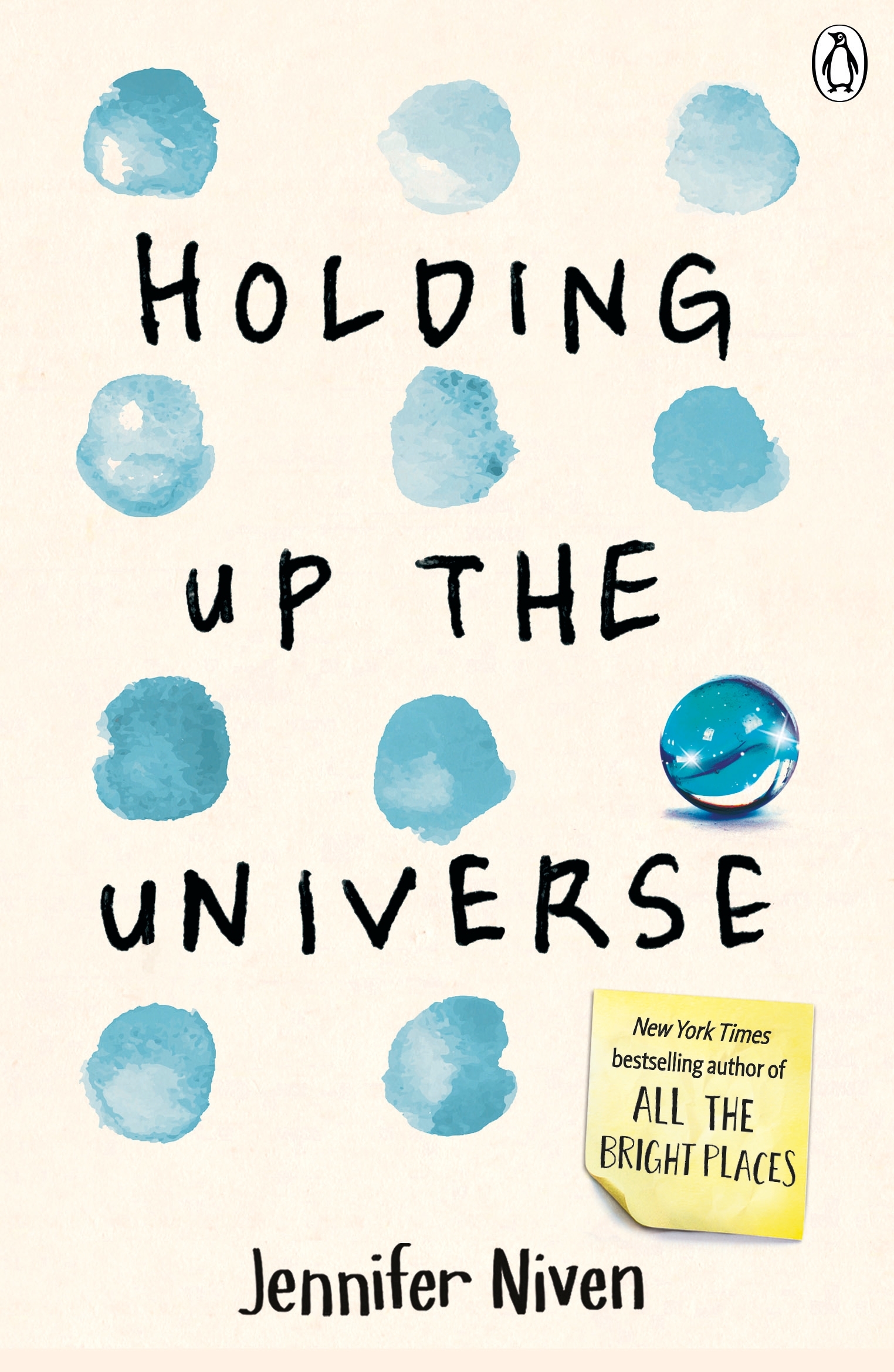
Holding up the Universe by Jennifer Niven (2016)

My rating: 4.5 of 5 stars
People are shitty for a lot of reasons. Sometimes they're just shitty people. Sometimes people have been shitty to them and, even though they don't realize it, they take that shitty upbringing and go out into the world and treat others the same way. Sometimes they're shitty because they're afraid. Sometimes they choose to be shitty to others before others can be shitty to them. So it's like self-defensive shittiness. – Jack Masselin
As for the rest of you, remember this: YOU ARE WANTED. Big, small, tall, short, pretty, plain, friendly, shy. Don’t let anyone tell you otherwise, not even yourself. Especially not yourself. – Libby Strout

There is so much positivity in Holding up the Universe from the body positivity to the messages about living with neurological disorders to changing perceptions to the value of family. What is great about the characters is their diverse depth. There is a racial diversity you would expect in a modern American high school but it isn’t in your face it’s just there, within the two main characters one is Anglo, one is mixed race African American – Anglo but has his mother’s dark skin. The is LGBTQ representation but like the racial diversity, it isn’t in your face it is mentioned and not dwelled upon.

It has a point of predictability we are all semi-aware of the end game but it’s the journey that matters. Holding up the Universe is a glorious journey that is fast paced and takes a few surprising twists. For me this was more a character-based story, it is more about Jack and Libby than the plot. The support cast is introduced as needed with family and school family being basically the only people met. It is a pleasant way of reading but it does require engaging characters with good writing to succeed.

Jack has a neurological disorder called prosopagnosia, face blindness (he has been given a deliberately bad case), he cannot recognise people by their faces, he can see them, but can’t recall them. Then I started trying to walk in his shoes, I tried to think how I would identify the people in my life, how hard that must be. I live with my own neurological disorder and Jack’s hiding it, coping with it as best he can is so accurate. I spent so much time screaming at the book that is me, I did that. Jack’s family are great because they feel real, in particular, his little brother Dusty is just adorable, as is the robot.

And Libby. Libby is fantastic. Never does Jennifer Niven imply that she is a healthy weight, just that she is a healthier weight than she was and Libby is going to own it, not be a slave to people’s expectations. That body positivity is something that the age bracket this book is aimed at really need to read. A reminder that we come in all shapes and sizes and colours. Her creating fictional backstories is just something that people do (or is that a type of person that I know too many of) and the name selection for the people was king.

Jennifer Niven succeeded in creating good characters and suitable writing, Holding up the Universe is captivating and enjoyable while sending brilliant messages to people. 4.5 stars, I’m feeling like more could have been done with some of the support cast. This is a book that deserves all the praise it gets and more. For me this is essential for libraries and I would suggest reading it if you want a look with a window to what someone else is experiencing.

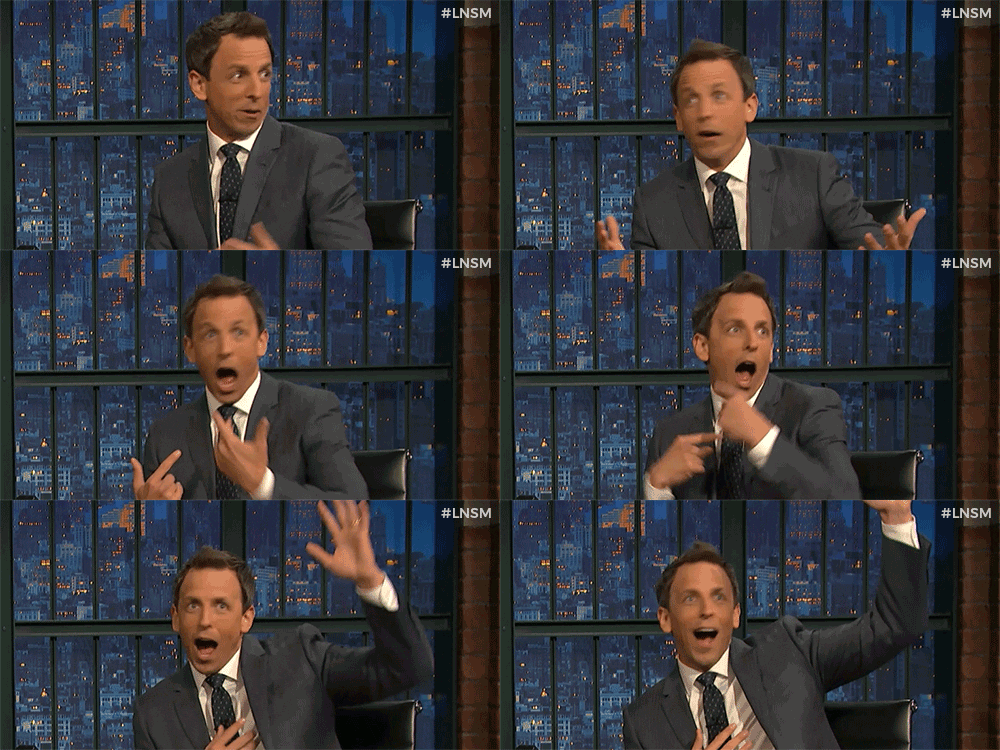
My reading experience in a gif:

Crossposted from Goodreads

References
Cover for 9780141357058. (n.d.-c). Penguin Australia. [Image File]. Retrieved from https://cdn2.penguin.com.au/covers/original/9780141357058.jpg
Late Night with Seth Meyers. (n.d.). I did it gif. Giphy. [Image file]. Retrieved from https://media.giphy.com/media/l2JJzQQc4HU5ydot2/giphy.gif
McPherson, C. (2018c, April 24). Catherine McP's review of Holding up the Universe. Goodreads. [Goodreads Review]. Retrieved from https://www.goodreads.com/review/show/2368915131
Niven, J. (2016). Holding up the universe. New York, NY: Alfred A. Knopf.